
Opening your dishwasher after a cycle and finding standing water in dishwasher compartments is one of the most common complaints homeowners have. In most cases, it means something is blocking proper drainage, and the actual cause is usually simple enough to fix without calling a technician.
In this guide, we’ll walk through why this happens, how to diagnose it, and what you can do to get your dishwasher draining properly again.
Why Does Water Pool at the Bottom of a Dishwasher?
A small amount of water (usually less than a cup) sitting around the drain area after a cycle is actually normal — it keeps the seal lubricated. But if you’re seeing a noticeable puddle every time, standing water in dishwasher tubs usually points to a drainage issue worth investigating.
Here’s how a dishwasher works in simple terms: water enters through the inlet valve, gets heated and sprayed through the arms to clean dishes, then drains out through the pump and hose at the end of the cycle. When any part of that drainage path is blocked or malfunctioning, you end up with a drainage problem and water left in dishwasher tubs.
Common Causes of Standing Water in a Dishwasher
Clogged Filter
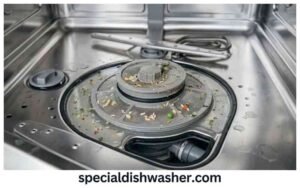
The filter at the bottom of the tub traps food particles and debris. Over time, it can clog and block water from draining out, and a clogged filter is one of the most common triggers for standing water in dishwasher tubs and a dishwasher not draining.
Dishwasher Drain Hose Issues
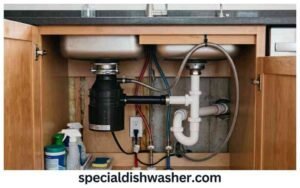
The drain hose carries wastewater from the dishwasher to your sink’s plumbing or garbage disposal. If it’s kinked, clogged, or installed with a loop that’s too low, water can back up instead of flowing out.
Faulty Drain Pump
The dishwasher drain pump pushes water out through the hose. If the pump motor burns out or the impeller gets jammed by debris like glass shards or food, it simply can’t do its job, leaving water in the tub.
Dishwasher Clogged Drain or Garbage Disposal Connection
A dishwasher clogged drain at the disposal connection is another frequent culprit.
If your dishwasher drains through a garbage disposal, a clog there — especially if the disposal was recently installed and the plastic knockout plug wasn’t removed — can send water right back into the dishwasher instead of letting it flow out.
Clogged Air Gap
Many dishwashers connect to the sink plumbing through an air gap, the small cylindrical fitting near your faucet. If this gets clogged with food debris or grease, it can block drainage entirely and cause water to sit in the dishwasher even when the pump itself is working fine. This is an easy spot to overlook during troubleshooting.
Faulty Float Switch
The float and float switch help monitor the water level and provide overfill protection. If the float is stuck or the switch is faulty, it can interfere with normal dishwasher operation, and on some models this may prevent the drain cycle from running correctly, leaving water sitting in the tub.
Error Codes on Specific Brands
Some brands display specific fault codes when they detect a drainage issue, though exact codes can vary by model and year. On some models, Bosch dishwashers often show E24 or E25 for a drainage fault. LG models commonly display OE, while Samsung units may show 5E or 5C. Whirlpool and Maytag dishwashers typically show F9 E1. If you own one of these brands, checking the manual for the exact code can quickly narrow down whether the problem is the pump, a sensor, or a blocked hose.
How to Fix Standing Water in a Dishwasher
Follow this dishwasher troubleshooting sequence before assuming you need a full replacement:
Safety First
Before touching any part of the dishwasher, disconnect it from the power supply (unplug it or switch off the circuit breaker) and shut off the water supply valve. Wear gloves when reaching into the filter, pump, or drain areas, since broken glass and sharp debris are common there.
Clean the Filter
Remove the bottom rack and locate the cylindrical or flat filter at the base of the tub. Twist it out (check your manual for the exact release mechanism), rinse it under hot water, and scrub away any trapped debris with a soft brush.
Inspect the Drain Pump
Locate the drain pump (typically located underneath the dishwasher or beneath the tub, although its exact location varies by model) and check for obstructions like broken glass or food debris. If the pump makes a humming noise but doesn’t drain, it may be jammed. If it’s silent, the motor itself may have failed and require replacement.
Test the Float Switch
Locate the small dome-shaped float switch at the bottom of the tub and gently move it up and down. It should move freely without sticking. If it’s jammed with debris or doesn’t spring back, clean around its base or replace it.
Check the Air Gap and Garbage Disposal
Remove the air gap cover near your faucet and clear out any buildup inside. If your dishwasher drains through a garbage disposal, run the disposal for a few seconds to clear any clog, and confirm the knockout plug was removed during installation.
Run a Short Cycle
Reconnect the power supply and water supply valve, then run a quick rinse cycle to verify if the water drains properly. If it still doesn’t, move on to the drain hose.
Check the Drain Hose
This step takes a bit more effort, since you’ll need to pull the dishwasher out from under the counter. Inspect the drain hose for kinks or blockages, disconnect it, and run water through it to check for clogs. Make sure the hose has a high loop before connecting to the disposal or sink drain, as this prevents backflow. If the pump motor still isn’t draining after checking the hose, it likely needs professional replacement.
Check for Error Codes
If your unit is showing a fault code, look it up in your owner’s manual or the manufacturer’s support site to confirm exactly which component is failing before ordering parts. Whirlpool (F9 E1), Bosch (E24/E25), LG (OE), and Samsung (5E/5C) each use their own code systems, so check the model-specific guide rather than assuming codes match across brands.
Preventing Future Drainage Problems
- Scrape large food scraps off plates before loading
- Clean the filter every 2–4 weeks
- Run hot water in the sink before starting the dishwasher, so it starts with hot water in the line
- Avoid overloading the bottom rack, which can block the drain area
- Periodically check the drain hose and air gap for buildup
When to Call a Professional
If you’ve cleaned the filter, checked the hose, and inspected the pump, but water is still left in the dishwasher, the issue may be a failed pump motor, a faulty control board, or a deeper clog in your home’s plumbing. At that point, it’s worth calling an appliance repair technician rather than risking further damage by disassembling the unit yourself.
Frequently Asked Questions
How much water should be left in the dishwasher?
A small amount, usually less than a cup, is normal around the drain area after a cycle. Anything more than that suggests a drainage problem worth investigating.
Why is my dishwasher not draining completely?
The most common causes are a clogged filter, a blocked drain hose, a faulty drain pump, or a clogged air gap. Working through each in turn usually identifies the culprit.
How do I get standing water out of my dishwasher?
Bail out the excess water with a cup or towel first, then check and clean the filter, drain pump, and hose following the troubleshooting steps above.
Can a clogged filter cause standing water?
Yes. A clogged filter is one of the most frequent causes of water sitting in the tub, since it blocks the path water needs to drain out.
Should I run my dishwasher if there is standing water?
It’s best to address the drainage issue first. Running a cycle with standing water already in the tub can make the problem worse. It can also affect how well your dishes get cleaned.
Final Thoughts
Standing water in dishwasher tubs is frustrating, but it’s rarely a sign you need a brand-new appliance. In most cases, a clogged filter, a clogged dishwasher drain, or a bent drain hose is the culprit. Many of these issues can be fixed in less than 30 minutes with basic tools. By working through the troubleshooting steps above, most people can resolve the drainage problem themselves and avoid an unnecessary service call.
